
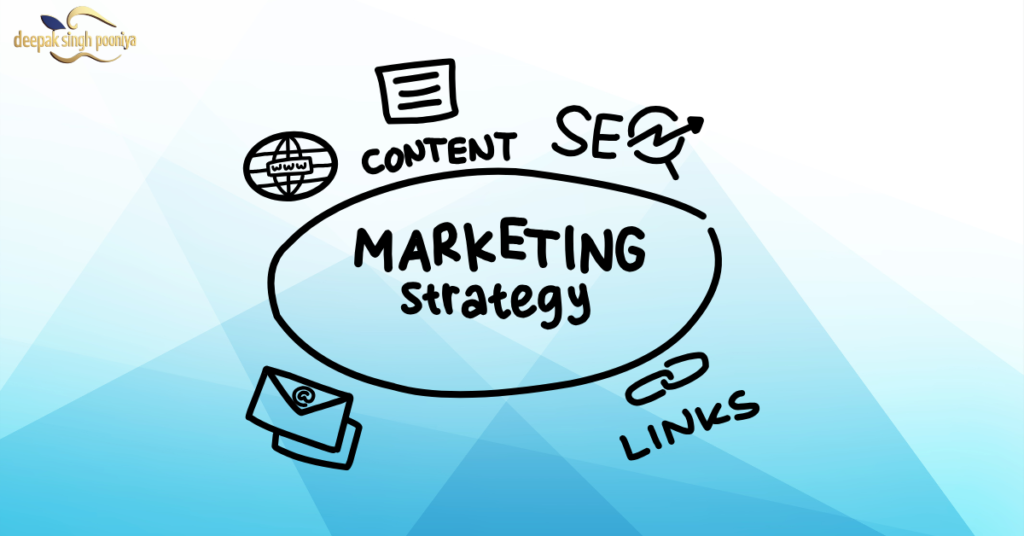
What Is a Marketing Strategy?
A marketing strategy is a business plan to promote products and services to customers to buy them. It is a long-term plan that helps businesses achieve their goal.
What are the 4 marketing strategies?
- Product – the good or services that meets customer needs and wants.
- Price – the amount of money the customer must pay to acquire the product.
- Place – the distribution channels used to deliver the product to a customer.
- Promotion – The activities and strategy used to raise awareness and encourage customers to buy a product..
Stages of marketing Funnel
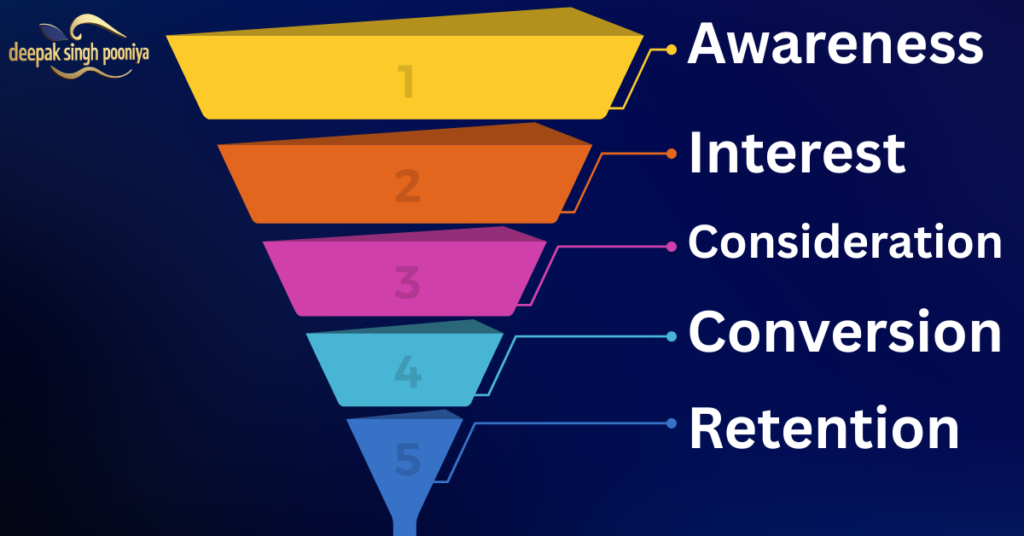
1. Awareness
. This is where people discover your brand for the first time.
. Social media ads, blogs, YouTube videos, and SEO strategies play a key role.
2. Interest
. When someone starts showing interest in your brand, you need to provide valuable content.
.Email marketing, case studies, and detailed product information help generate natural interest.
3. Consideration
. Hear, the potential customer evaluates whether your product suits their needs.
. Reviews, testimonials, and free trials can strongly influence their decision.
4. Conversion
. At this stage, an interested customer turns into a buyer.
.Discounts, easy payment options, and hassle-free checkout process can boost your sales.
5. Retention
. Keeping customers engaged is crucial for long-term success.
. Regular follow-up loyalty programs, and exclusive offers help maintain customer relationships
Optimizing your marketing funnel can improve both sales and brand loyalty. Every business should tailor the funnel to match its target audience for the best impact .
How to Create a Marketing Strategy ?
Let’s be honest—marketing strategy sounds like one of those big business buzzwords. But in reality, it just means: How are you going to reach the right people and make them want what you offer?
If you’re running a business, or even just thinking about starting one, having a solid strategy helps you stop guessing and start growing.
Here’s a super simple way to build one from scratch:
1. Know Who You’re Talking To
Don’t try to sell to “everyone.” It never works.
Think: Who is most likely to need your product or service?
Ask yourself:
How old are they?
Where do they live?
What problems do they have?
What do they care about?
When you know who you’re talking to, your message becomes way more effective.
2. Figure Out What Makes You Different
There are probably a bunch of others selling something similar. So… why you?
Maybe it’s better quality. Maybe it’s cheaper. Maybe it’s just more fun.
Whatever it is—make that clear. That’s your edge.
3. Pick Your Channels Wisely
You don’t need to be everywhere. Focus where your audience hangs out. For example:
Instagram for fashion & lifestyle
YouTube for tutorials or reviews
WhatsApp for personal services
Email for long-term connection
Start small, test things out, and double down where you see results.
4. Plan Your Message
Now that you know who you’re talking to and where—what will you say?
Your content should:
Solve a problem
Show value
Feel like a conversation, not a sales pitch
Be real. People like honesty more than perfection.
5. Set Clear Goals
What do you want to happen? More website visits? More calls? Sales?
Set goals that are specific and trackable, like:
“Get 100 new Instagram followers in 30 days”
“Sell 50 items this month”
“Book 10 free consultations”
This way, you know what’s working and what’s not.
6. Check, Adjust, Repeat
Your first plan won’t be perfect—and that’s totally okay.
See what works. What flops. Then tweak and try again.
Marketing is more about learning than luck.
Final Thought:
You don’t need a degree in marketing to build a good strategy. You just need to understand people, stay consistent, and keep testing.
Start simple. Learn fast. Grow steady.
About the Author
Deepak Singh Pooniya is a freelance marketing and digital marketing consultant based in Jaipur, India. He helps businesses grow online through practical SEO, social media, and content strategies. With a focus on keeping things simple and effective, his goal is to deliver results without the usual marketing fluff.